A story of the renovation of a post-war complex
Location: The Hague, Netherlands
Year: 3rd Semester, Bachelor’s 2019
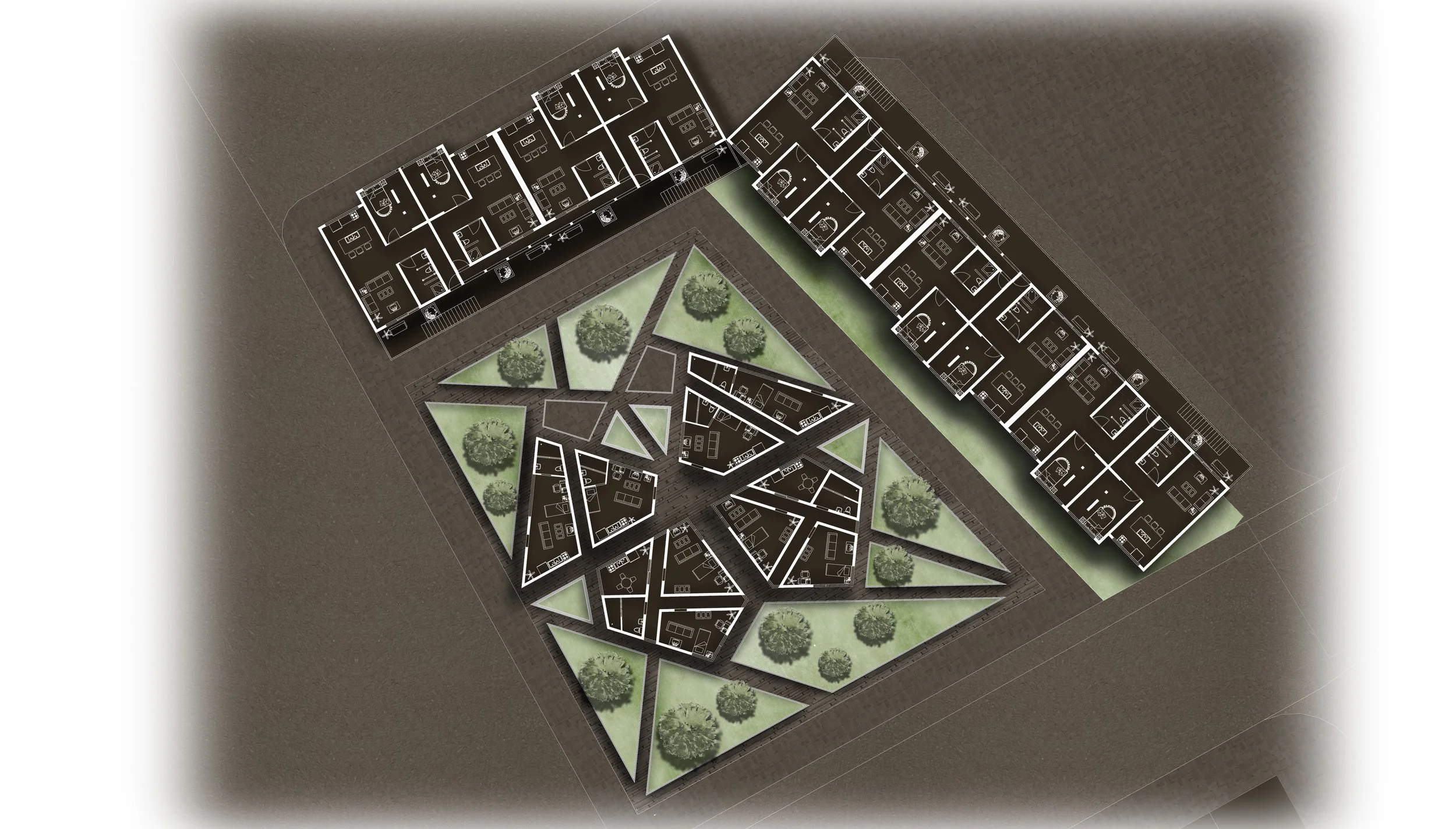
This design is underway for an ensemble of two residential buildings and the connecting collective space between them, called ‘Stamp’, in Mariahoeve, The Hague. The Stamp is part of a series and is located on the corner of Diamanthorstand Reigersbergerweg.
Mariahoeve was set up in 1957 as a mixed garden city: a green neighbourhood close to the centre of The Hague, designed by the young urban planner Frits van der Sluijs.
Van der Sluijs was inspired by an excursion he and fellow civil servants from the municipality of The Hague made in 1953 to Denmark and Sweden. Immediately after the Second World War, much hard work was done on the construction of the welfare state, and cities such as Stockholm and Copenhagen were a guide for many developments in the housing sector.
The Story
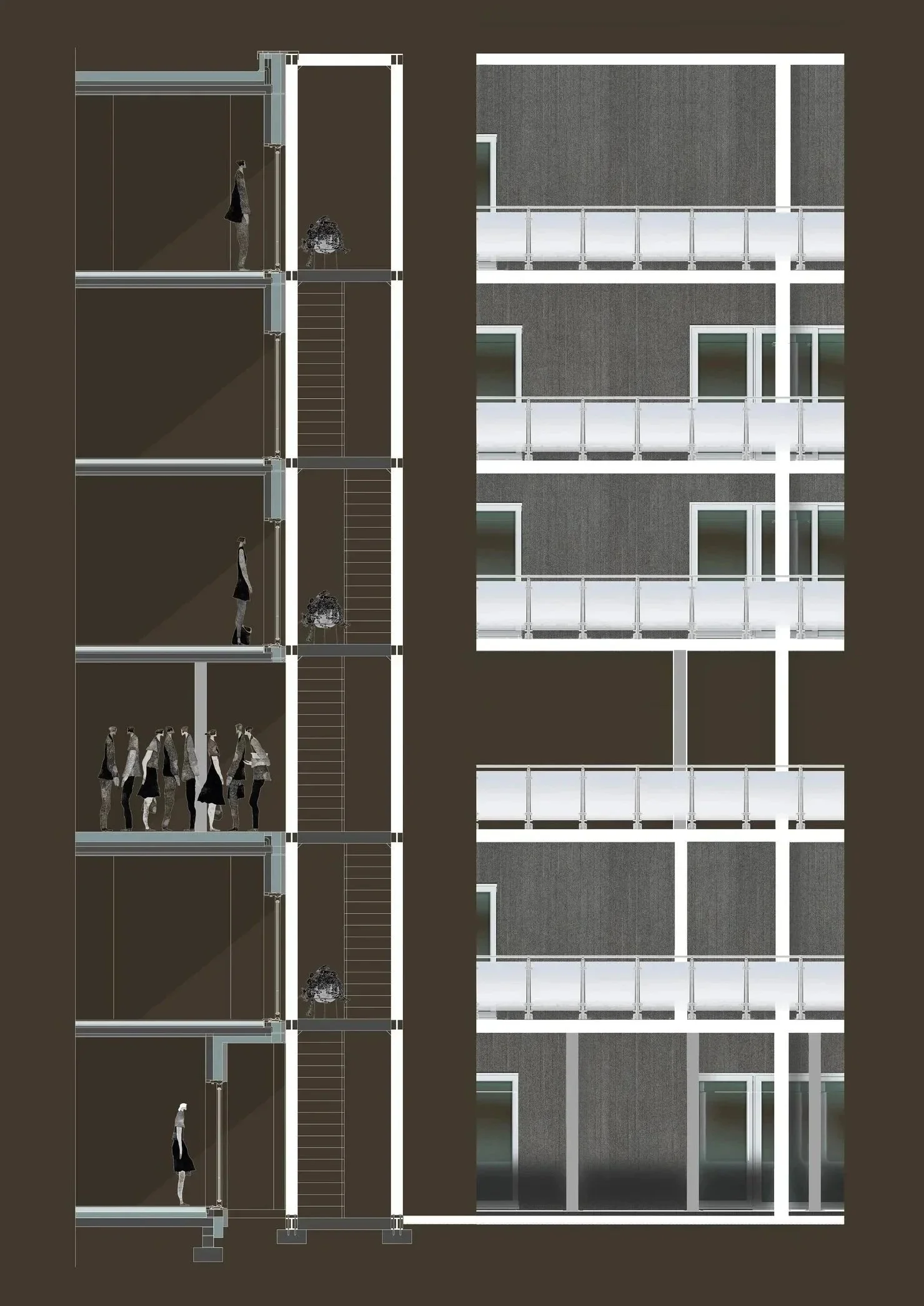
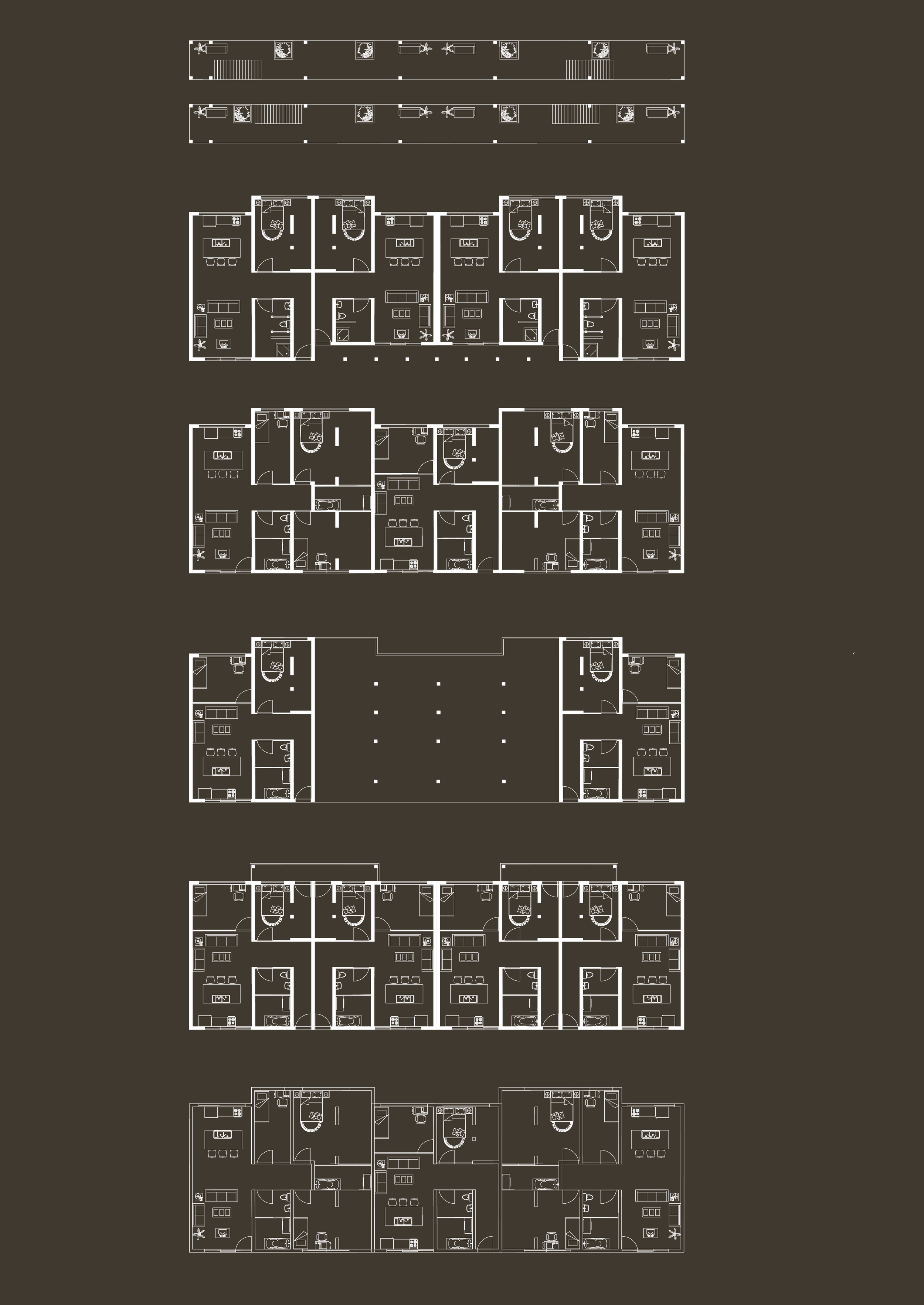
The project renovates an existing L-shaped residential block while introducing tiny houses and new collective spaces to restore the social qualities of the area. The design opens previously unused green spaces and organises them through a systematic grid, creating new view lines across the site between existing residences and new buildings.
The concept is based on six principles: tiny houses, sustainability, greenery, communication, collectivity, and healthy living. Interior spaces are reorganised to accommodate diverse household sizes and improve accessibility, including shared facilities and a lift.
The renovation preserves the historical character of the building while integrating modern solutions. The original concrete structure and random window pattern are maintained, while sustainability is improved through upgrades such as double glazing and facade renovation, creating a balance between the old architectural identity and contemporary design.