Social inclusion
〰️
Economic Inclusion
〰️
Spatial Inclusion
〰️
Social inclusion 〰️ Economic Inclusion 〰️ Spatial Inclusion 〰️
Parties:EZ Iman Ramshini, GE Alexandra Fassoula, LA Miriam Schoemakers, MA Gyeongri Park, PL Daan Papenhuijzen, RP Jasmine Ng, SA Ieva Davulyte, VG Pien Adank, VO Renzo Westerbeek & Thijs Müller, VP Reinis Melgalvis
Location: Rotterdam, Netherlands
Year: 4th Semester, Bachelor 2020
THE
Story
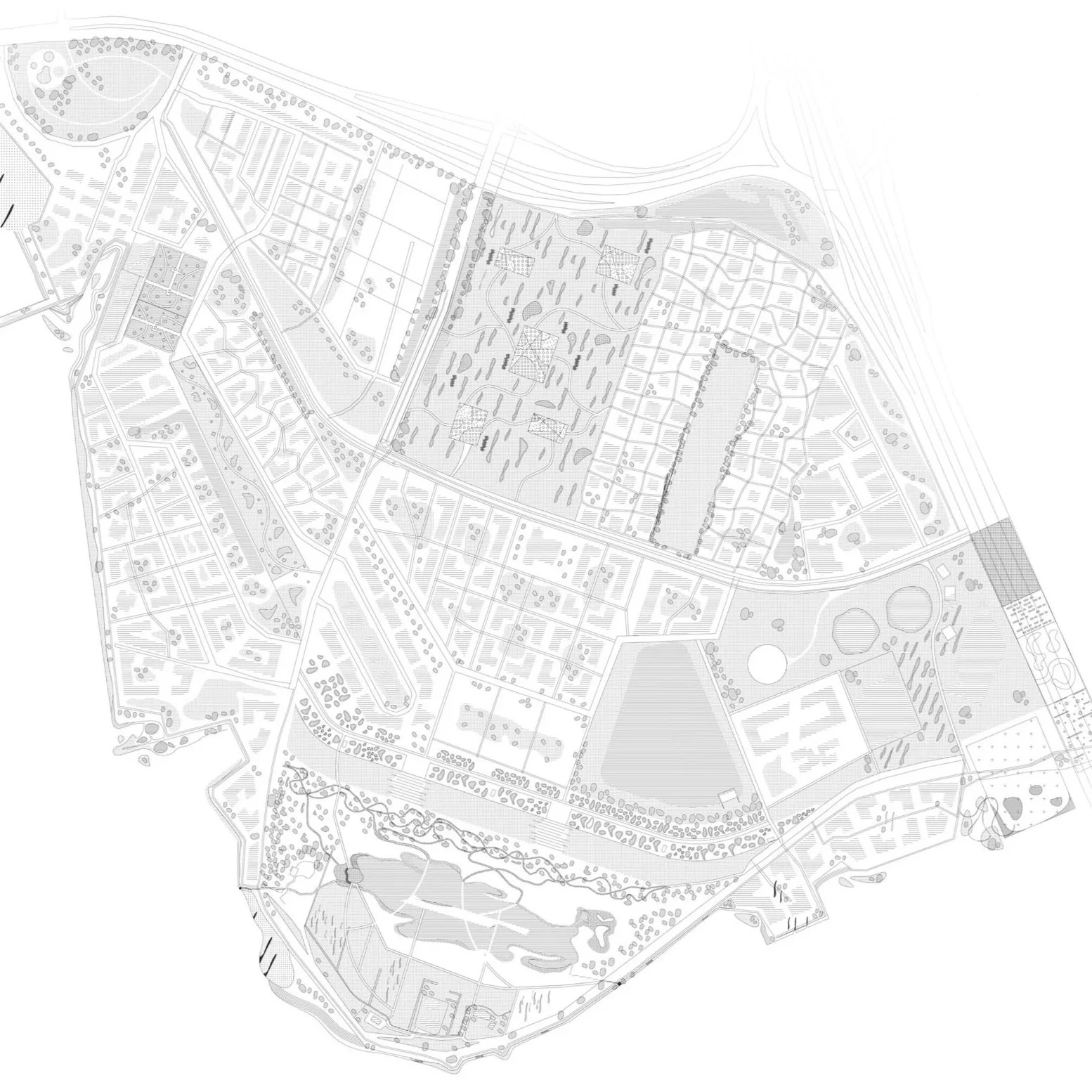
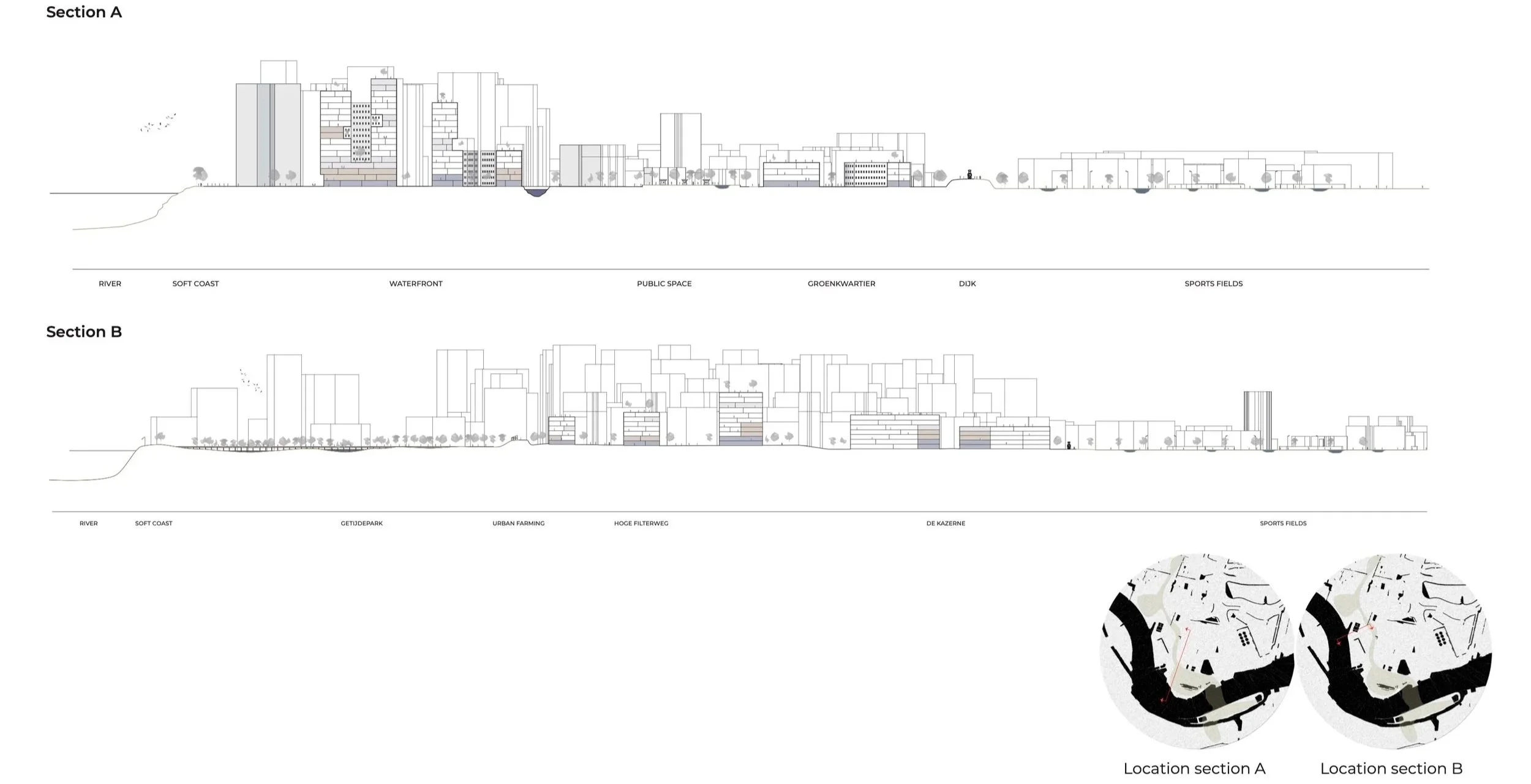
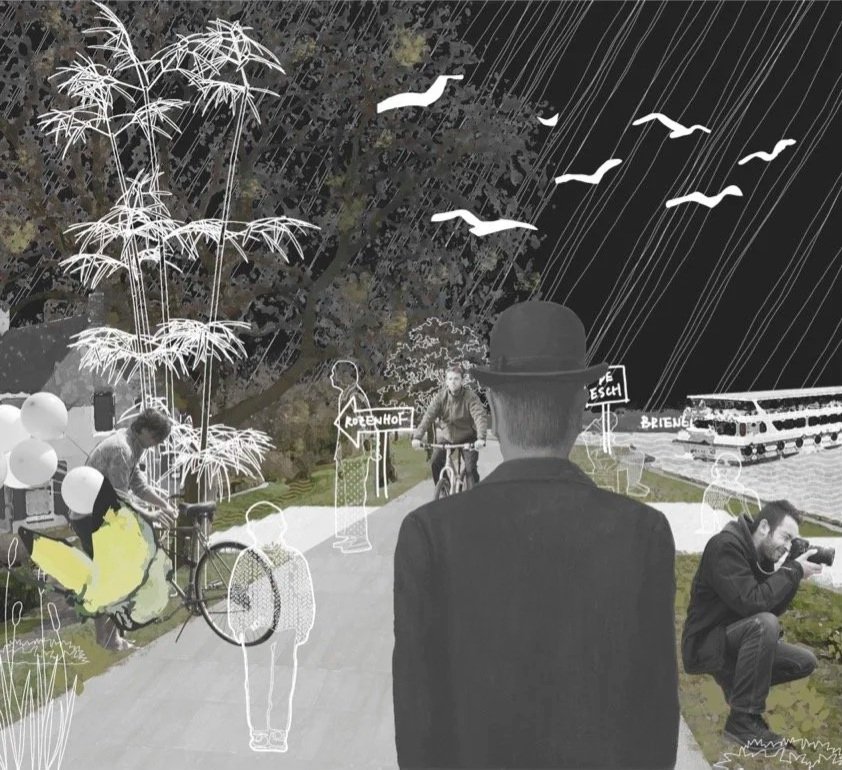
The project envisions Rotterdam as a showcase for an inclusive future city, where the needs of all residents are valued equally. Inclusivity is understood through three interconnected dimensions: spatial, social, and economic. Focusing on the redevelopment of Alexander–Zuidplein and De Esch, the proposal adopts a human-scale perspective to improve everyday urban experience while preserving local identity and preparing the city for future growth.
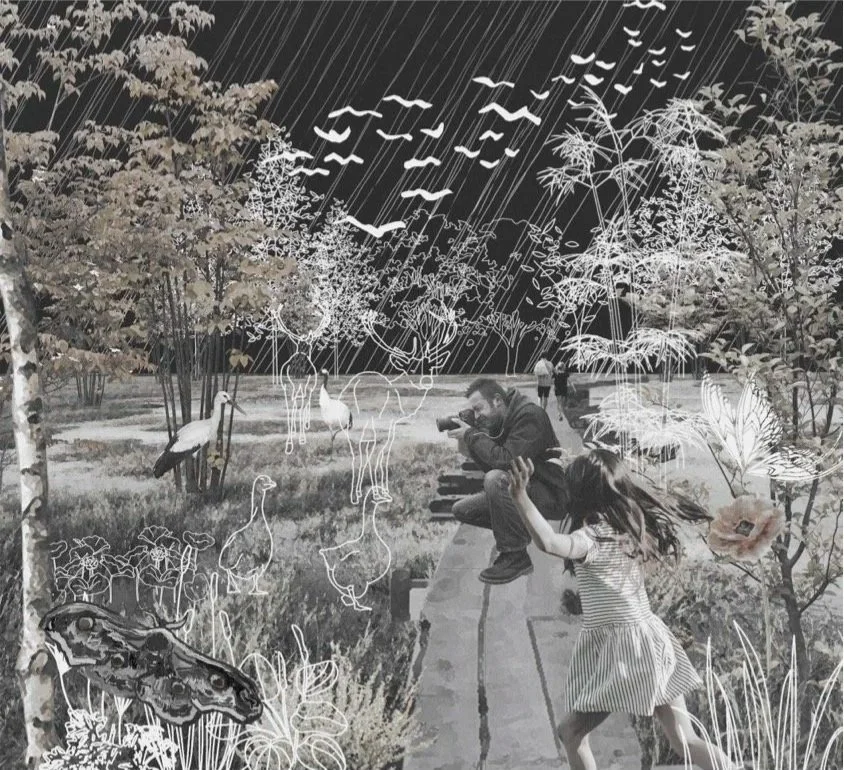
The design improves accessibility and connectivity by introducing new public transport infrastructure, enhancing cycling networks, and creating a pedestrian and bicycle bridge linking De Esch with Feyenoord. A continuous green route for pedestrians and cyclists connects the north and south of Rotterdam and integrates water-based transport such as water taxis, while the Tide Park strengthens the relationship between landscape and water.
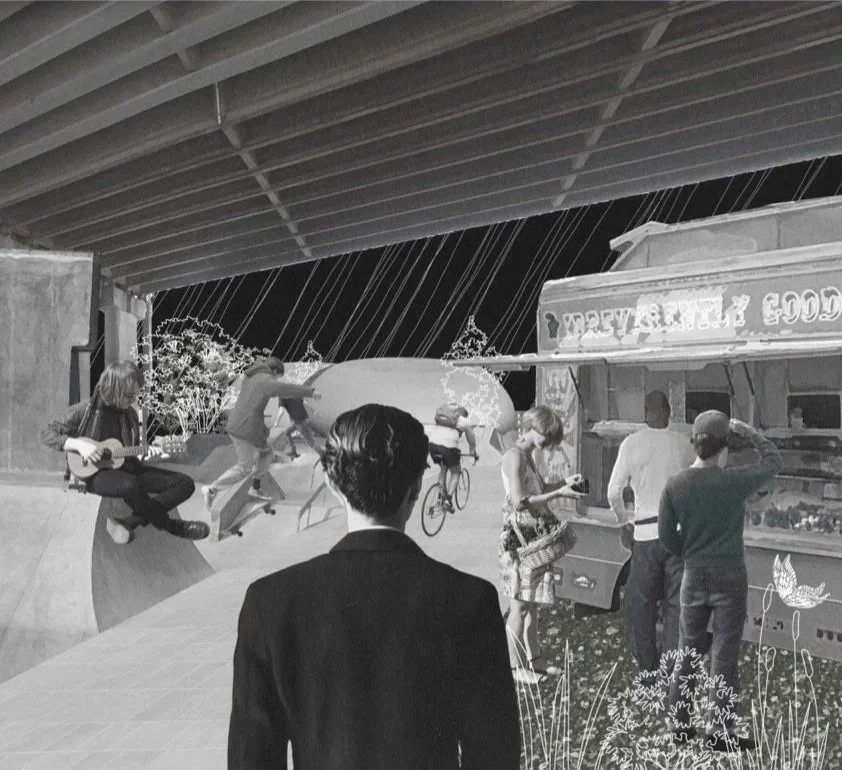
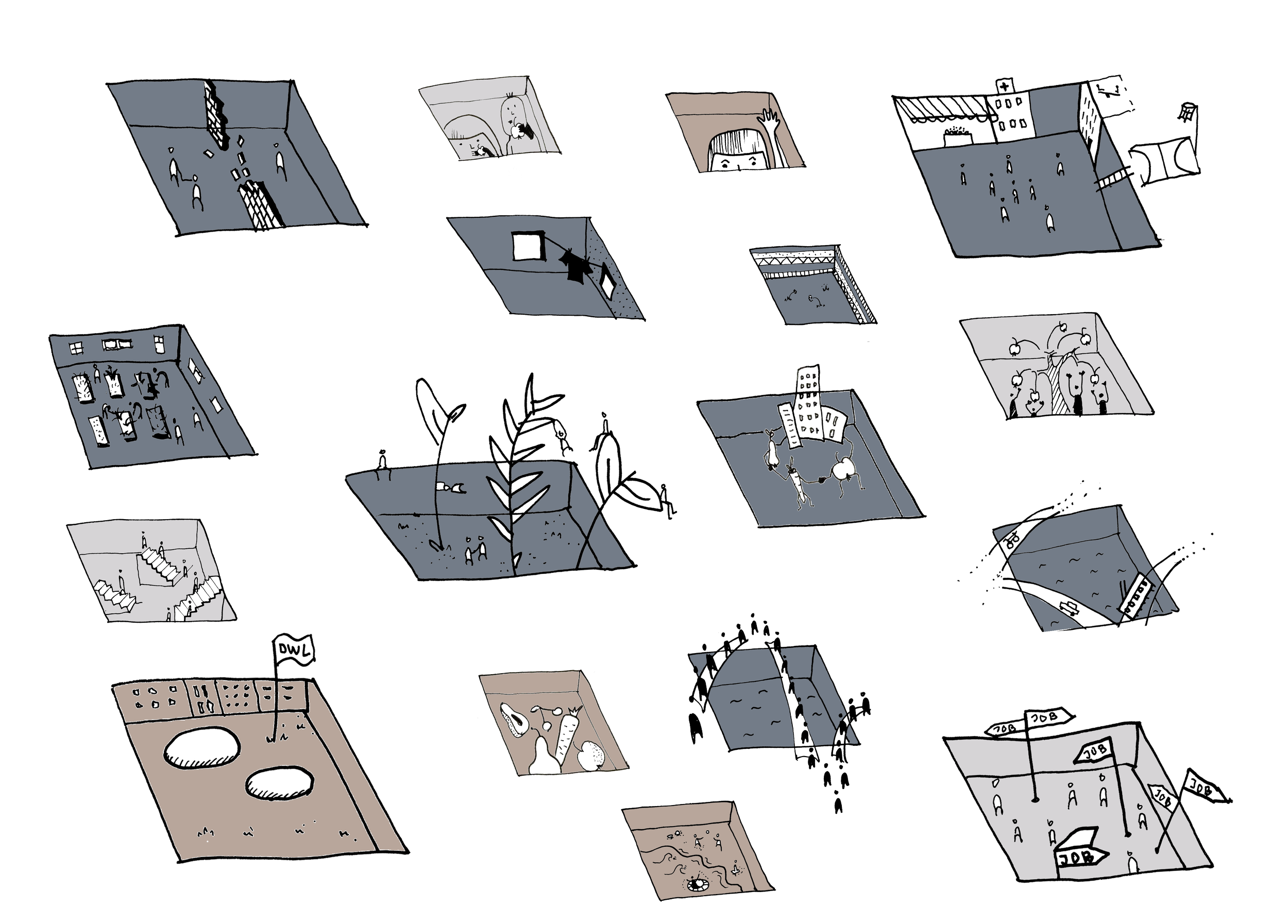
The proposal also reinforces local identity and community life through cultural spaces, waterfront improvements, urban farming, and public access to the historic DWL water tanks. At the same time, diverse housing typologies are introduced to accommodate population growth and support economic opportunities. Together, these strategies transform De Esch into a connected, green, and inclusive urban district, contributing to a more resilient and accessible Rotterdam.