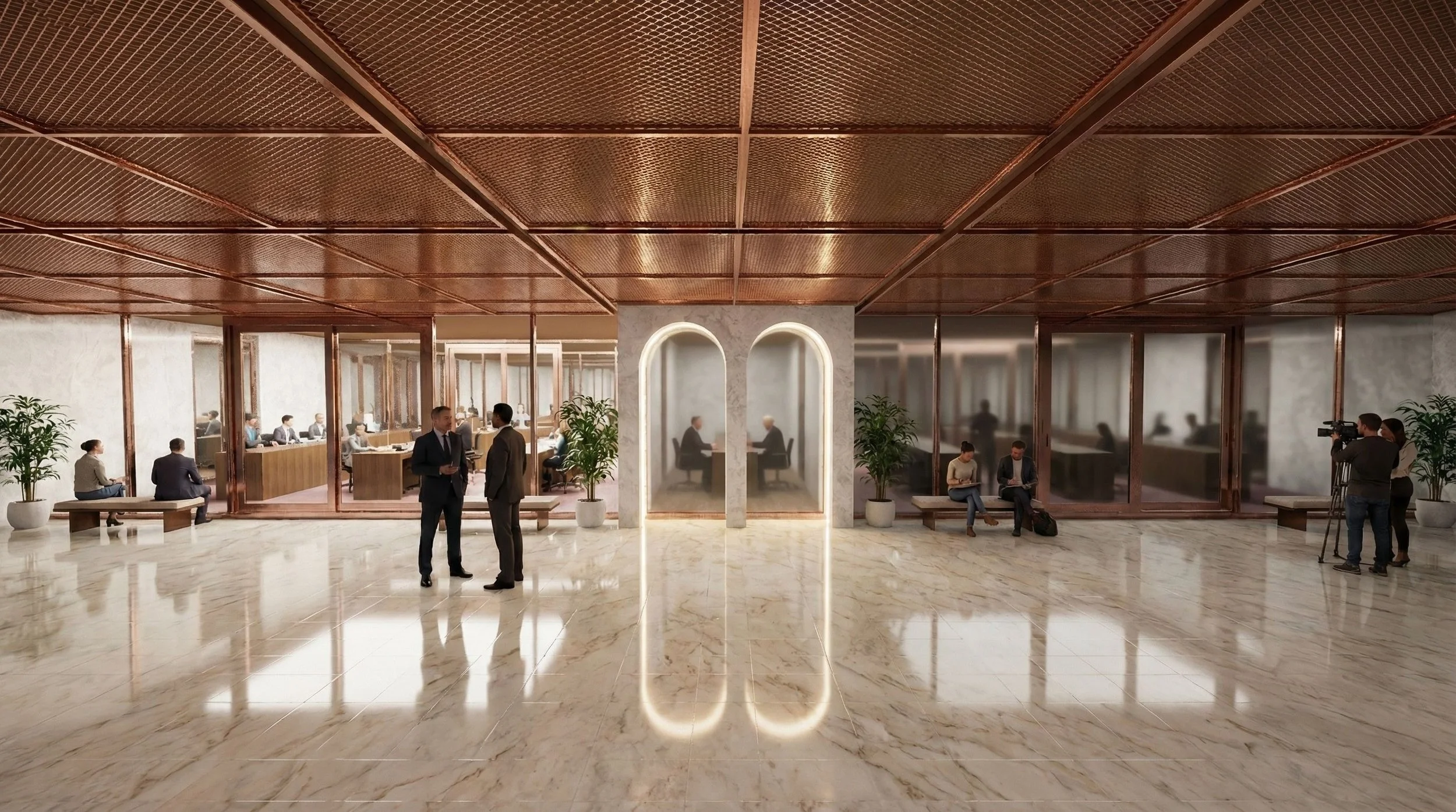
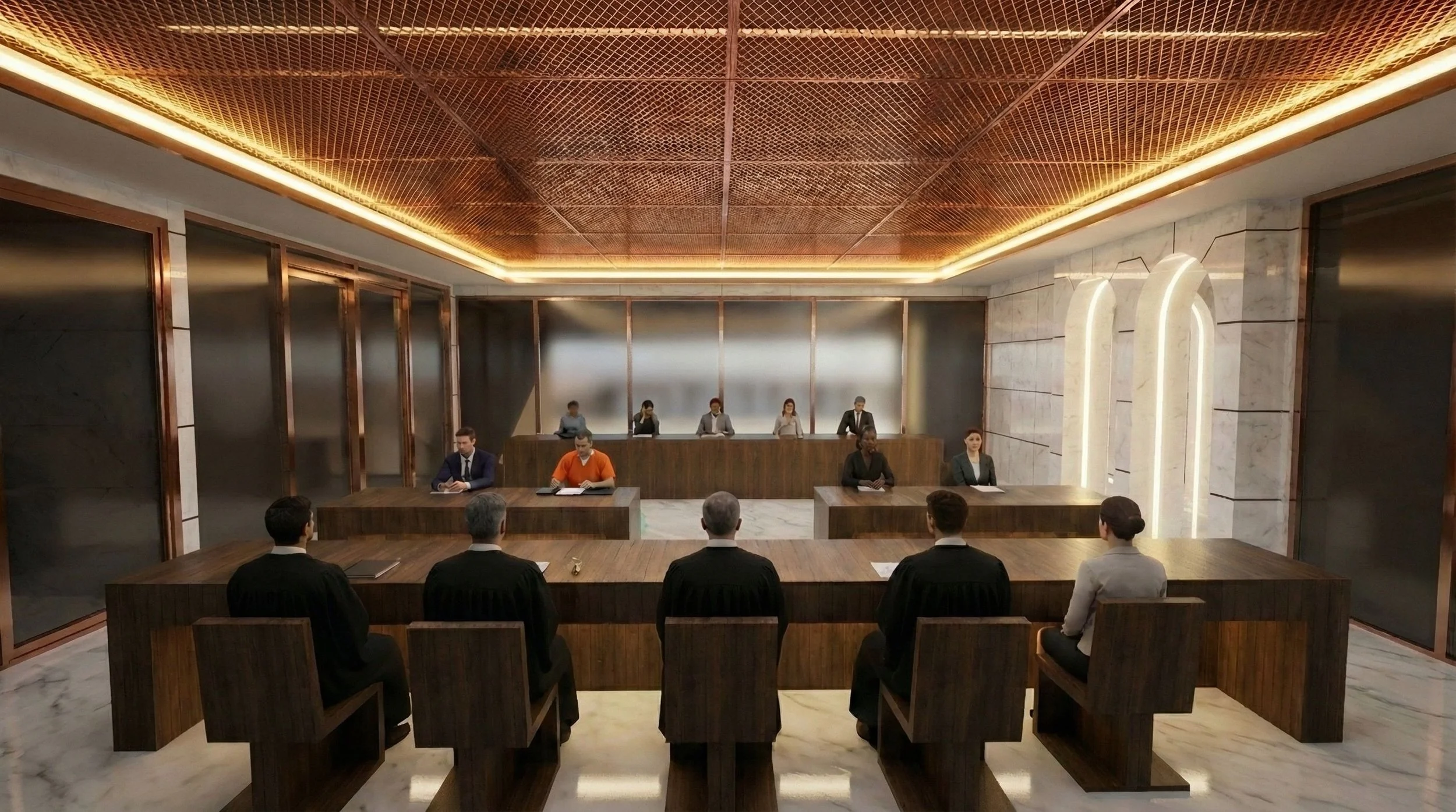
Reconfiguring Justice Through Architectural Transparency
Location: Milan, Italy
Year: March 2026
Status: Master Graduation Design

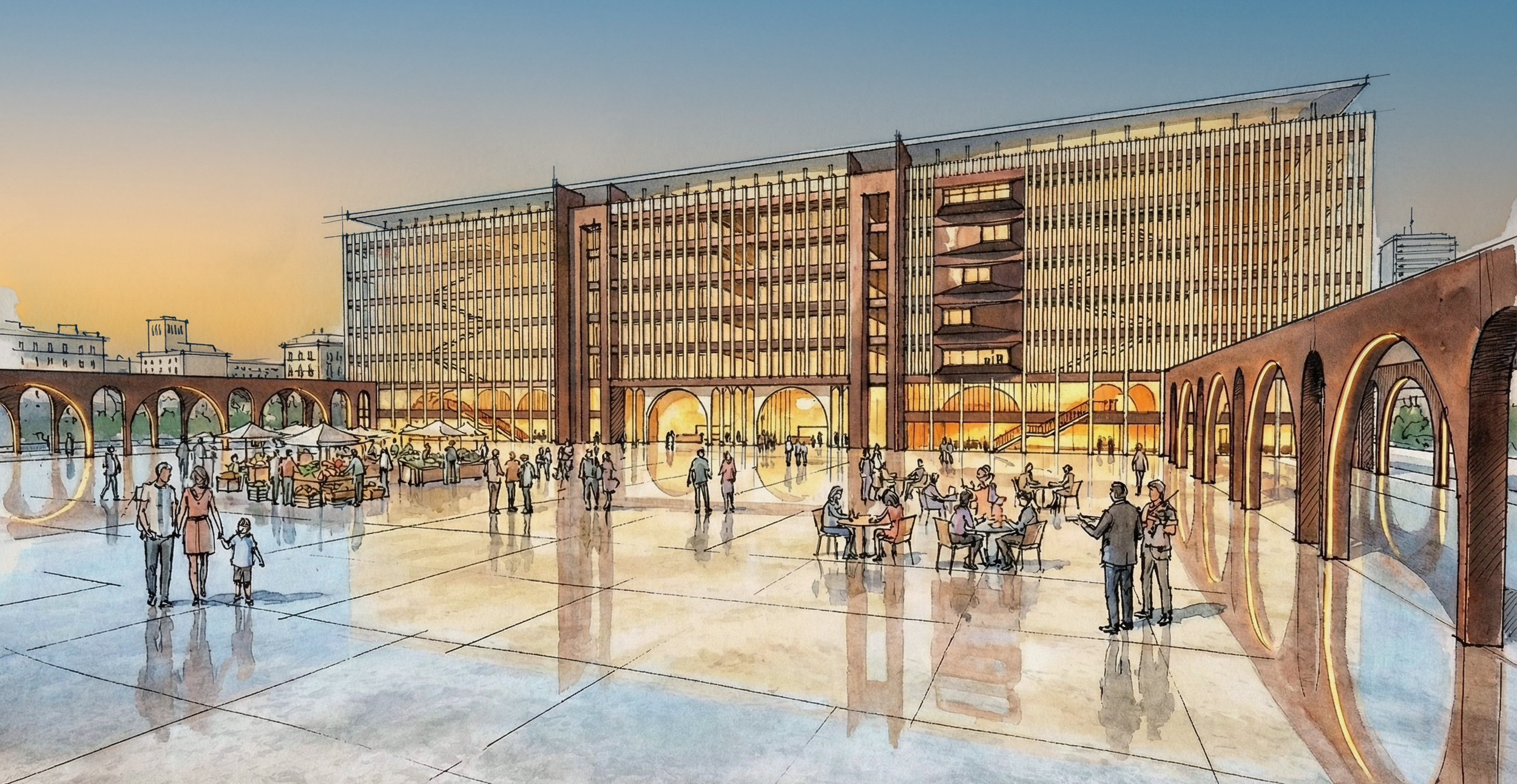
Thresholds of Power explores how architecture shapes contemporary perceptions of justice. Using the Palazzo di Giustizia in Milan as a case study, the project examines how its monumental Fascist-era architecture continues to frame institutional authority, reinforcing ideas of centralized power, opacity, and control.
The research also investigates how the courthouse is evolving as a building type. Judicial institutions today face challenges such as digitalisation, AI-supported procedures, transparency, and environmental responsibility, requiring courthouses to operate as secure yet accessible civic infrastructures.
The Story
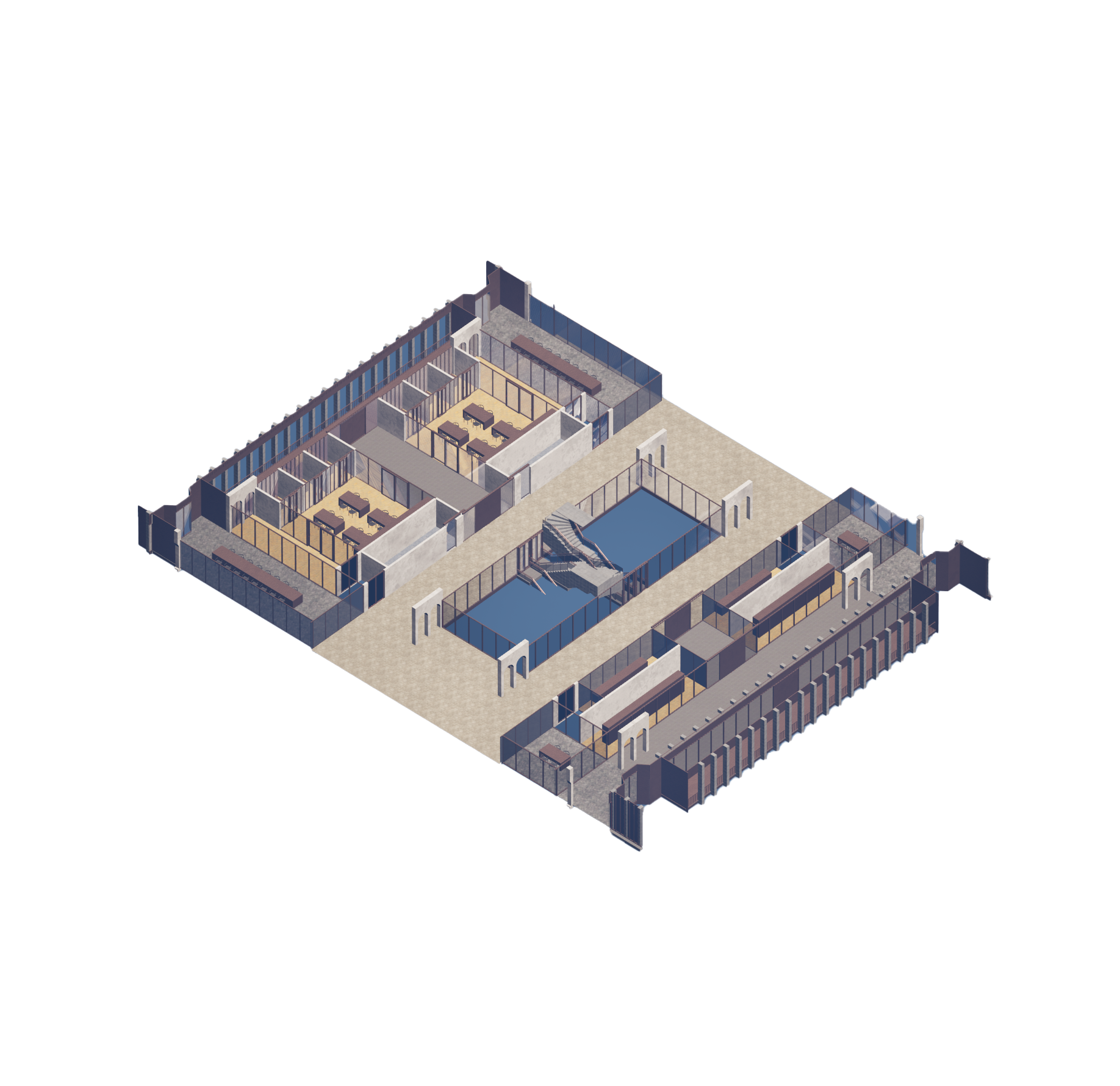
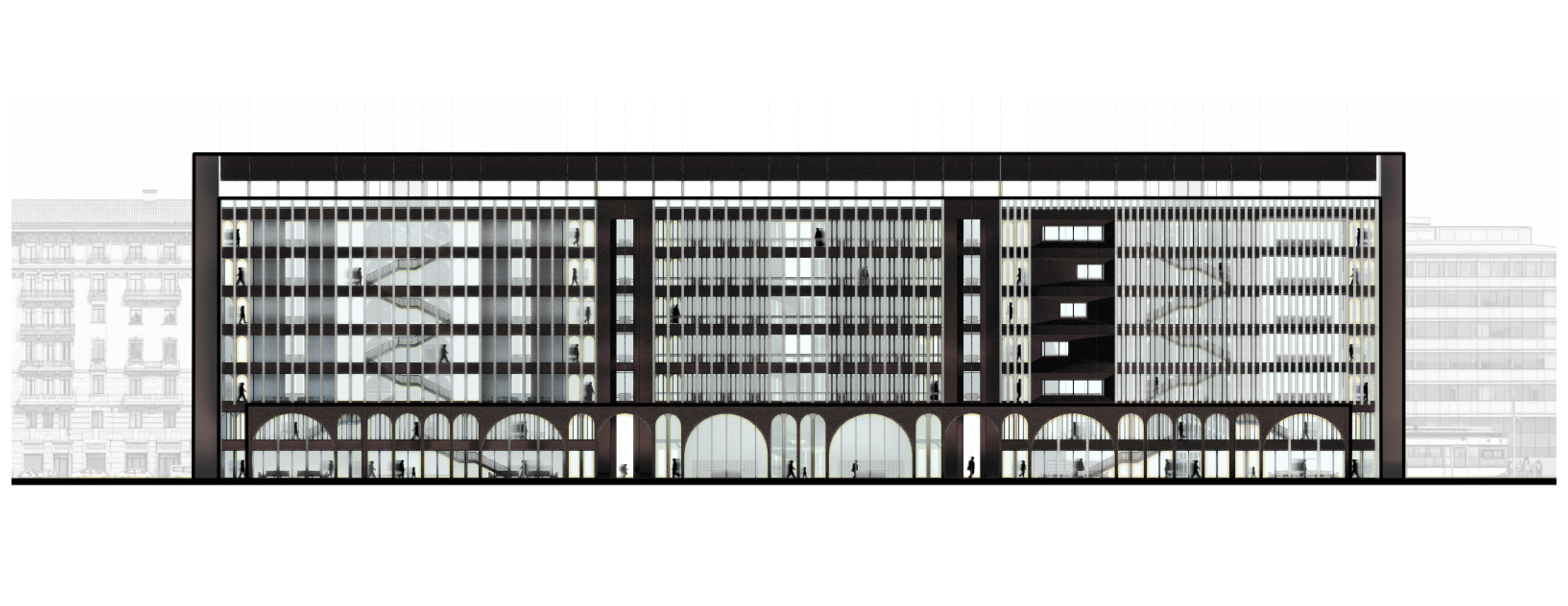
The project proposes a new architectural intervention built on the footprint of the existing Palazzo di Giustizia in Milan. Rather than preserving the building’s original spatial logic, the design reinterprets and reconfigures this monumental post-Fascist structure through a more democratic, transparent, and accessible architectural framework.
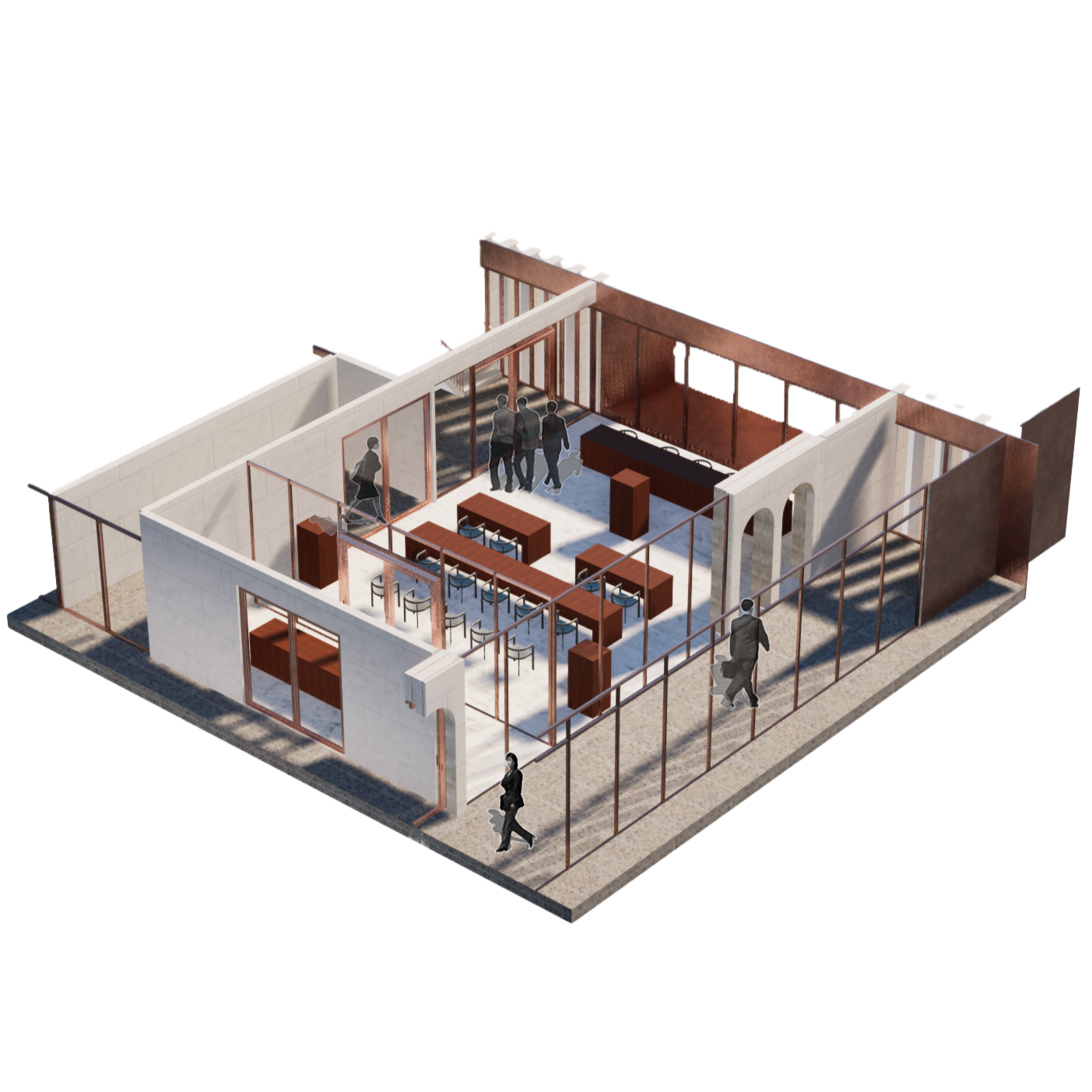
The proposal restructures the building’s thresholds—entrances, urban connections, doors, and corridors—to create new forms of connectivity and public engagement. Through three stages—reading existing spatial and institutional data, reconfiguring circulation, and introducing new threshold conditions—the design transforms traditional barriers into more open and legible interfaces.
By integrating data centres and smart materials such as glass, the courthouse becomes a layered environment where the processes of justice are visible and understandable. In doing so, the project reimagines the architecture of authority, shifting the building from a symbol of centralized power toward a civic infrastructure that reflects transparency, accessibility, and contemporary democratic values.


Tools for Creating New Thresholds function as the architectural mechanisms that translate the project’s theoretical ideas into spatial form. They act as mediating elements between concept and design, transforming the abstract understanding of thresholds into tangible architectural components.
Through these tools, spatial boundaries are reconsidered and redesigned to support openness, accessibility, and interaction. Rather than acting as rigid barriers, thresholds become dynamic spaces of transition that shape how people move, see, and engage with institutional environments. In this way, the design expresses the values of a contemporary democratic era, where institutional spaces are expected to be more transparent, inclusive, and responsive to society.
Deaign principles: Clients, Program, Site


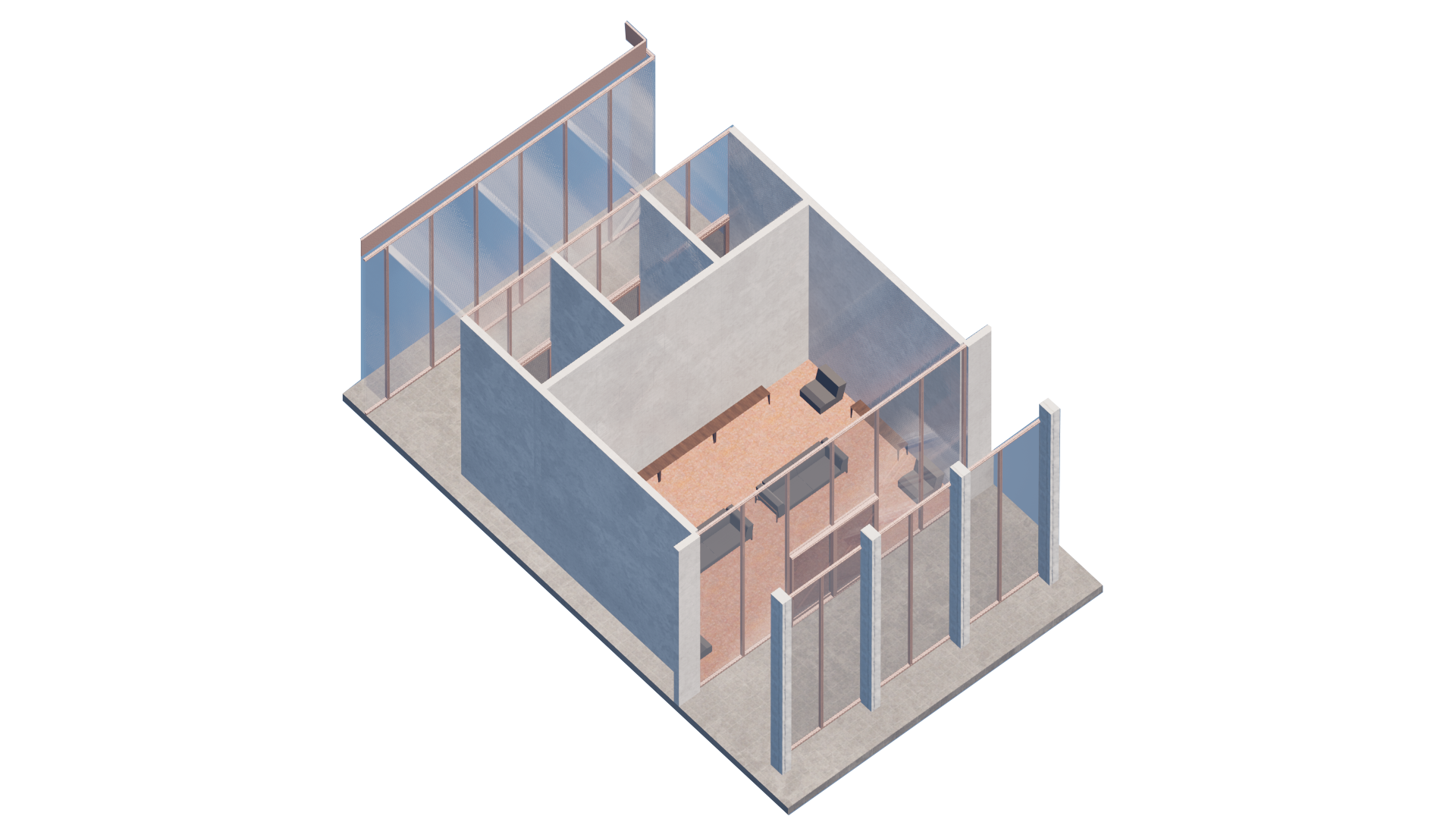
Public Ground Level
Courtrooms Level

-
![]()
CUSTODY
-
![]()
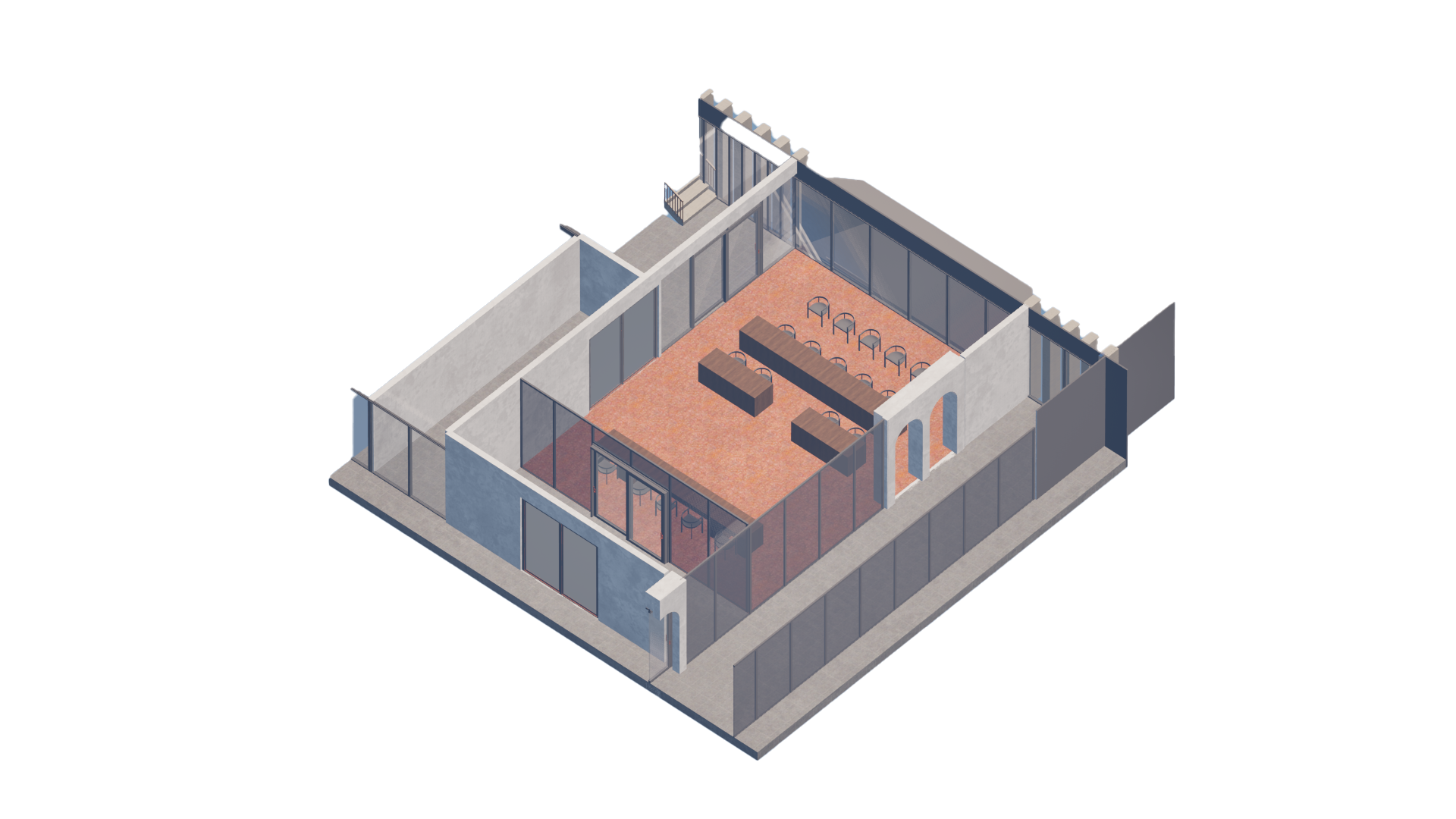
CRIMINAL COURTROOMS
-
![]()
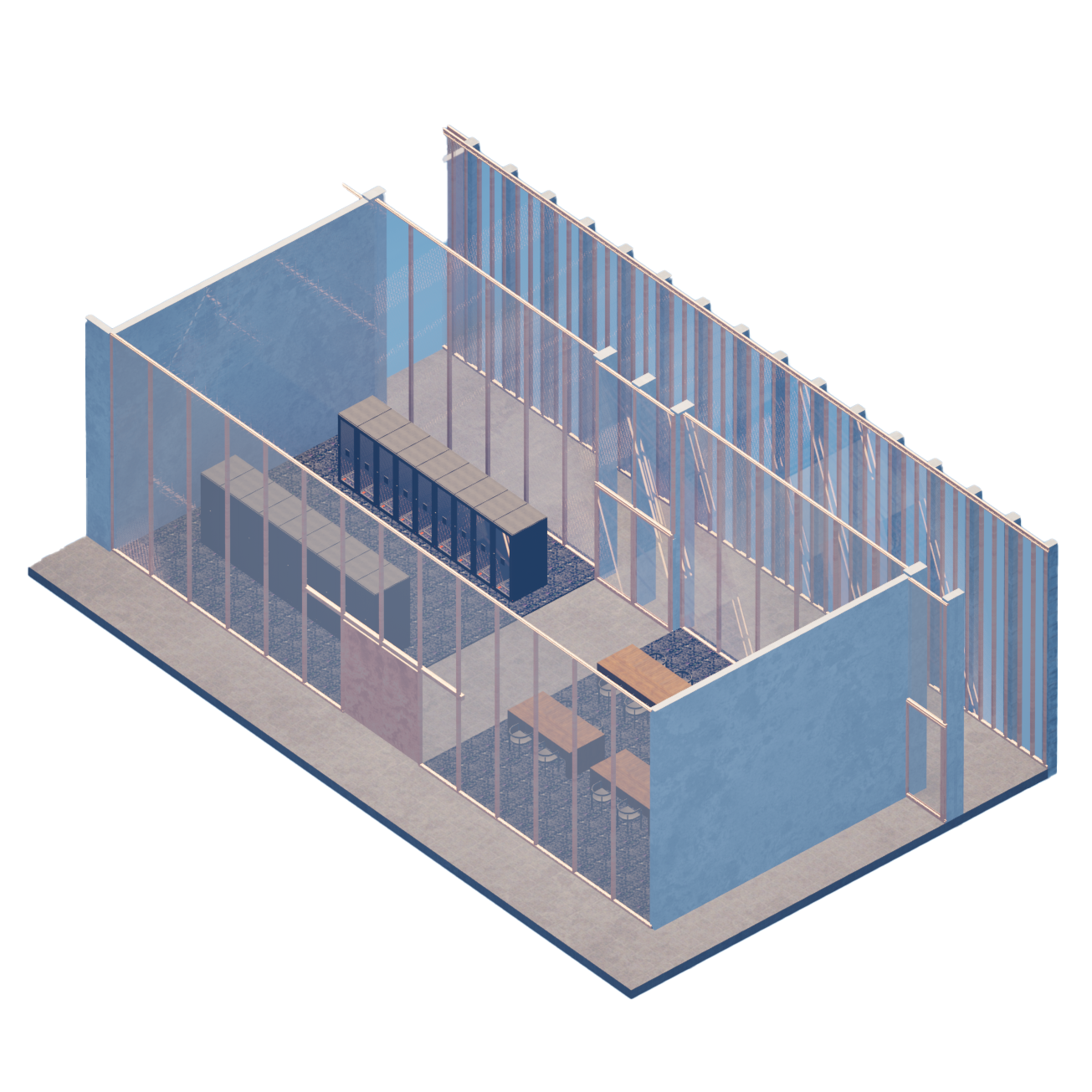
DATA CENTER
-
![]()
EXHIBITION GARDEN